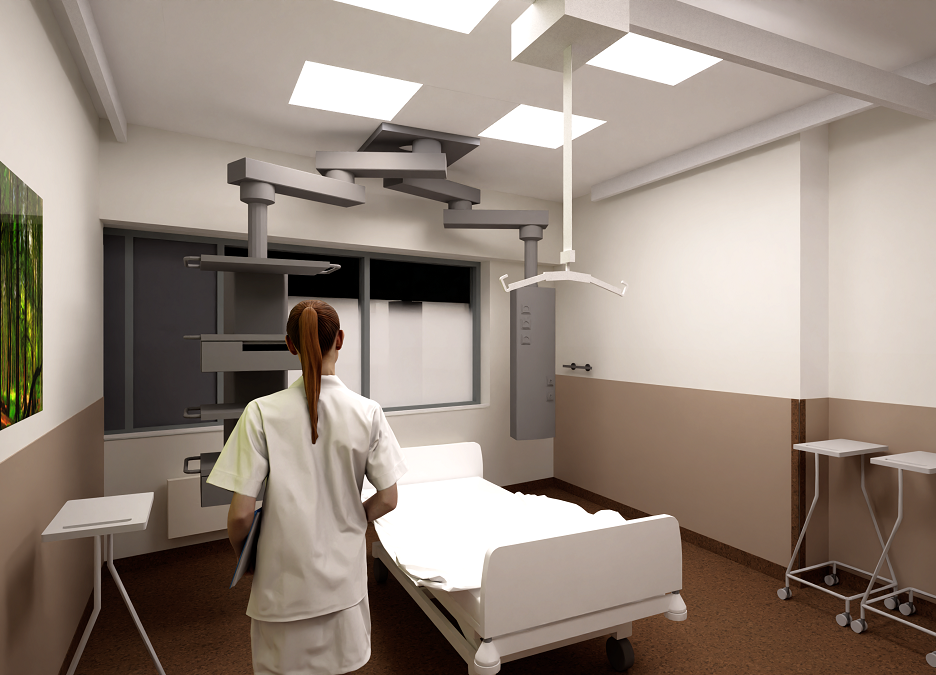
The First-in-Patient Unit (FiPU) of the LPI is a unique research environment within the clinic and serves as the central translational element of the LPI. It is a specifically designed area of the Intensive Care Units at the Jena University Hospital (JUH) where patient rooms and laboratory units are directly connected. Thus, the FiPU allows for testing of innovative diagnostic and therapeutic procedures under regulated clinical conditions at the bedside.
Within the LPI, rapid and accessible diagnostics, monitoring and therapeutic approaches for difficult-to-treat infections will be established. For the transfer of research results into the clinical application, and thus into patient care, methods and devices need to be tested. This helps ensure that the applications deliver reliable, accurate outcomes and meet the intended clinical benefits for patients. At the FiPU at Jena University Hospital, innovative photonic diagnostic technologies and therapeutic treatment options can be clinically validated and adapted under the highly regulated conditions of an Intensive Care Unit. The unique infrastructure, with patient beds located right next to the laboratories, thus enables the direct clinical application of new research concepts and methods. From 2027 onwards, pilot bedside studies will be launched at the FiPU.
Direct lab access
Integrated laboratory unit for immediate sample processing and technology adaption
Special patient rooms
Located next to the labs for time-efficient treatment
Clinical expertise
Intensive care by highly qualified teams with wide experience in clinical studies
High safety
Regulated and safe environment for the clinical validations
Expanding Standard Diagnostics
At the FiPU, research and patient care will be joined – innovative diagnostics and treatment methods complement the conventional medicine. With this concept, the FiPU is unique in Germany. Due to precise intervention in the course of infection early-on, a full outbreak of infection can be hindered. Faster diagnoses and new therapy concepts can lead to higher patient health and shorter hospitalizations.
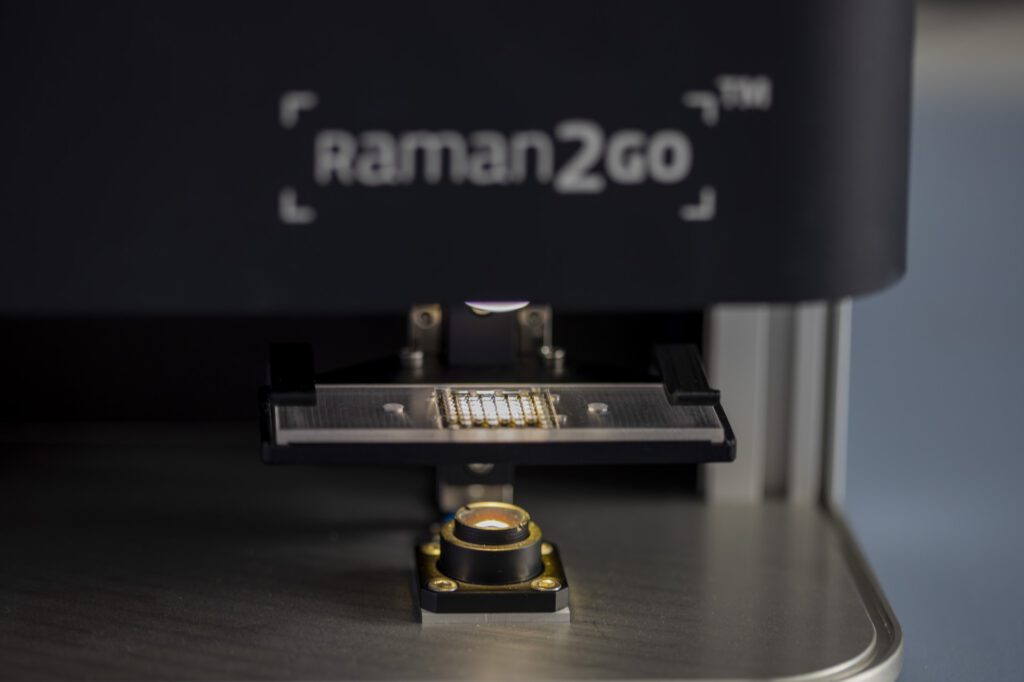
Photonic technologies like the RamanBioAssay™ provide new opportunities at the FiPU. The RamanBioAssay™ is a laser-based rapid test that enables the detection of bacteria and their antibiotic resistances within three hours. This ought to allow clinicians to adapt treatment strategies more rapidly.
New Diagnostic Technologies and Future Therapeutic Approaches
Cutting-Edge Technology Approaches – as of 2027
Multimodal spectroscopy (e.g. Raman microscopy) for rapid identification
of pathogens
Fiber optics-based technologies for
real-time monitoring of antibiotic effects
Non-invasive patient monitoring, e.g., via respiratory gas analysis
of volatile organic compounds
AI-supported analysis tools for automated, scalable and objective data evaluation
Therapeutic Perspectives
Nanoparticle-based substance release at the site of infection
Phage therapy to fight
multiresistant pathogens
Companion diagnostics for personalized therapies